
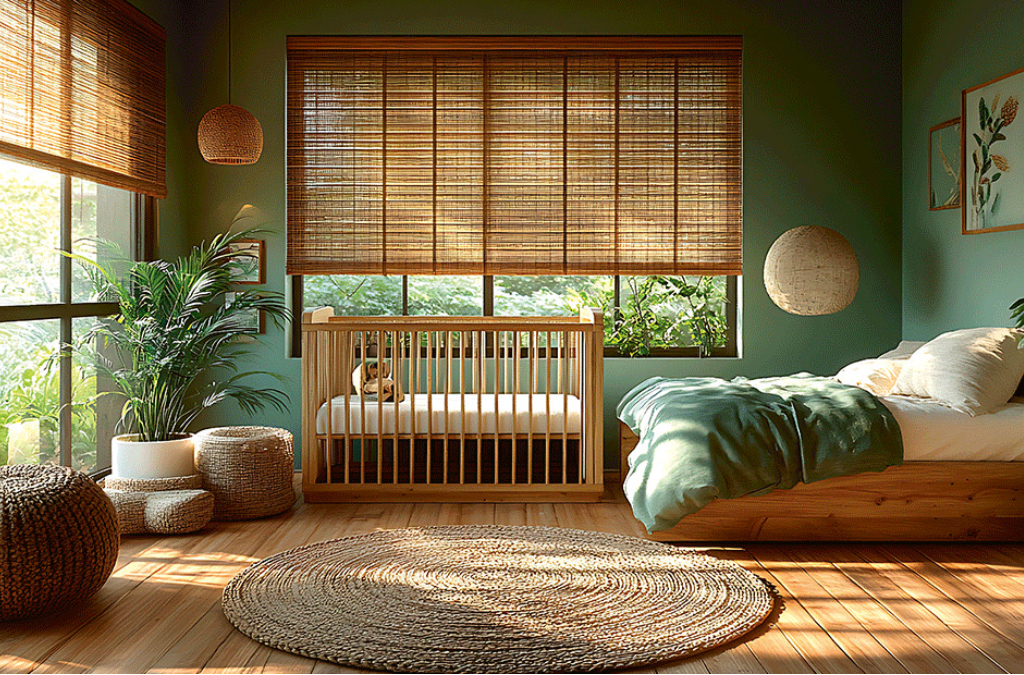
The article below delves into how natural fibers contribute to a beach-inspired style, how to use them effectively in window treatments, and how to combine them with other coastal design aspects.
Why Natural Fibers Are Essential for a Beach-Inspired Home
Natural fibers play a significant role in coastal design because they represent the textures and colors of the beach itself, including sand, driftwood, sea grass, weathered rope, woven baskets, and other natural textures found along the shoreline.
1. Organic Textures That Create Calm
Natural fiber window treatments, such as woven wood shades, bamboo blinds, jute drapes, and linen curtains, provide organic textures that instantly soften a space. Their slight irregularities reflect nature’s effortless, imperfect beauty. This promotes a sense of serenity and relaxation, which is important to any beach-inspired home.
2. Light, Airy Vibes
Unlike heavy synthetics, natural fibers gently filter light, giving spaces a cozy, beachy glow. The end result is a lighter, more open space, similar to how sunshine diffuses through beach grass or driftwood.
3. Soft, Neutral Color Palette
Natural fiber window coverings are often available in cream, beige, sand, taupe, honey, driftwood grey, and light brown. These earthy tones look great with coastal palettes, merging in with whites, ocean blues, sandy beiges, and mellow greens.
4. Eco-Friendly and Sustainable
Sustainability is frequently a feature of the beach-house ethos. Natural fibers such as bamboo, rattan, seagrass, and linen are renewable and promote eco-friendly living. Choosing these materials emphasizes the link to nature, not only visually, but also ethically.
Best Natural Fiber Window Treatments for a Relaxed, Beachy Look
Below are the most popular natural fiber options and how each contributes to a coastal atmosphere.
1. Woven Wood Shades (Bamboo, Jute, Grasscloth)
Woven wood shades are a popular choice for achieving a beachy vibe. These shades, woven from bamboo, grasses, reeds, and jute, give texture, warmth, and natural appeal.
Why They Work
- Softly filter sunlight without darkening the room.
- Create a rich, layered look with visible weaves.
- Evoke tropical and coastal environments.
- Add warmth and balance to white or blue-heavy rooms.
Design Tips
- Choose lighter weaves for a breezier feel.
- Layer with sheer curtains for softness
- Use cordless or motorized options to keep the look clean and minimal.
2. Linen Curtains
Linen is a popular fabric for coastal design due to its lightweight and breathable nature. Linen curtains glide softly with the air, providing an instant sense of comfort.
Why They Work
- Naturally wrinkled texture adds relaxed elegance
- Allows just the right amount of light in
- Enhances the airy, open feel of beach-inspired rooms
- Works in both modern coastal and traditional seaside homes
Design Tips
- Choose white, off-white, sand, or stone colors
- Floor-to-ceiling lengths create a luxurious flow
- Consider linen blends if you want fewer natural wrinkles
3. Bamboo Blinds
Bamboo instantly channels tropical and beachside vibes. It’s durable, lightweight, and full of texture.
Why They Work
- Bring an island-inspired feel
- Provide privacy while still letting in natural light
- Pair beautifully with white walls and ocean-themed décor
Design Tips
- Choose roll-up bamboo blinds for casual spaces
- Roman-style bamboo shades for more polished rooms
- Add a lining if you need better light control
4. Seagrass and Rattan Shades
Seagrass and rattan contribute a rustic, sun-washed style that blends perfectly into a beachy aesthetic.
Why They Work
- Their natural, uneven fibers mimic coastal vegetation
- Add earthy character to any room
- Extremely durable and eco-friendly
Design Tips
- Great for sunrooms, living rooms, and covered patios
- Pair with light-colored drapery to balance texture
- Combine with seagrass rugs or rattan furniture for a cohesive look
5. Cotton or Cotton-Linen Blend Curtains
Cotton is simple, breathable, and versatile, ideal for creating easy, casual beach-house charm.
Why They Work
- Lightweight yet durable
- Softens sharp light without blocking the ocean view
- Budget-friendly, making it great for large homes or rentals
Design Tips
- Choose soft colors like cream, pale blue, or gray
- For a clean coastal look, keep patterns minimal
- Layer with bamboo shades for depth and interest
How Natural Fibers Influence Light, Movement, and Mood
Natural fiber window treatments don’t just look good; they shape the entire feel of the room.
Light Diffusion
Natural fibers soften and diffuse sunlight, resulting in a warm, inviting glow that resembles sunlight reflecting off the water. Unlike synthetic fabrics, which can cast harsh shadows or glare, natural fibers diffuse light gently.
Movement and Flow
Linen and cotton curtains move softly with airflow, giving the room a charming, breezy feel. This movement replicates the rhythm of ocean waves, enhancing the calm beach mood.
Texture and Warmth
Coastal homes rely on layers of texture to keep spaces interesting yet serene. Natural fiber window coverings introduce:
- Rough weaves
- Visible knots
- Organic variations
These elements keep a room from feeling flat or too minimal.
Pairing Natural Fiber Window Treatments with Coastal Elements
Pair your natural fiber window coverings with other beachy decor elements to finish off the look.
1. Neutral, Sandy Tones
Natural fibers can be combined with whites, creams, beige, and warm grays to create a delicate, sun-bleached palette. This increases the organic appearance and keeps the room from feeling crowded.
2. Ocean-Inspired Hues
Accent with:
- Seafoam green
- Turquoise
- Navy
- Soft sky blue
- Jute rugs
- Rattan chairs
- Bamboo lamps
- Wicker baskets
- Seashell or coral décor
- Light, breathable throw blankets
These colors reflect the ocean and sky, making natural materials feel even more at home.
3. Weathered Wood and Driftwood Finishes
Furniture with washed or distressed wood finishes complements natural fiber window treatments, providing a genuine beach-house look.
4. Natural Décor Accessories
Natural fiber window coverings pair beautifully with:
These elements complete the layered, soothing look.
5. Light, Airy Fabrics
To maintain brightness and softness, pair woven shades with sheer curtains or lightweight textiles essential in a coastal environment.
Where Natural Fiber Window Treatments Work Best
Natural fiber coverings complement almost any space, but they are especially suited for:
✔ Living Rooms
Create a bright, open feel while adding texture and character.
✔ Bedrooms
Linen curtains and woven shades make bedrooms feel breezy, peaceful, and spa-like.
✔ Sunrooms
Enhance natural lighting with organic textures.
✔ Beach Houses & Vacation Homes
Bring that coastal charm to life in the most authentic way.
✔ Dining Areas
Natural fibers add warmth and a sense of relaxed elegance.
Maintenance Tips for Natural Fiber Window Coverings
Natural fibers require a bit more care than synthetics, but the payoff is worth it.
1. Dust Regularly
Use a soft cloth, feather duster, or vacuum brush attachment.
2. Keep Them Dry
Avoid moisture-heavy areas unless treated; natural fibers can absorb humidity.
3. Spot Clean Only
Avoid soaking natural woven materials, as this can distort or discolor the fibers.
4. Consider Light Linings
Linings help prevent fading and extend the life of woven shades.
Natural fibers can help create a casual, beachy vibe by adding warmth, texture, and natural beauty to any area. Their organic textures, light color palette, and breezy movement make them essential elements of coastal decor. Natural fiber window treatments, such as linen curtains, woven bamboo shades, rattan blinds, and cotton drapes, help to emulate the serene, casual appeal of beachfront living.
Natural fibers are not only ideal for coastal homes; anyone seeking tranquility, simplicity, and a connection to nature can benefit from their presence.

Recent Comments